


How do you choose the right safety shoes?
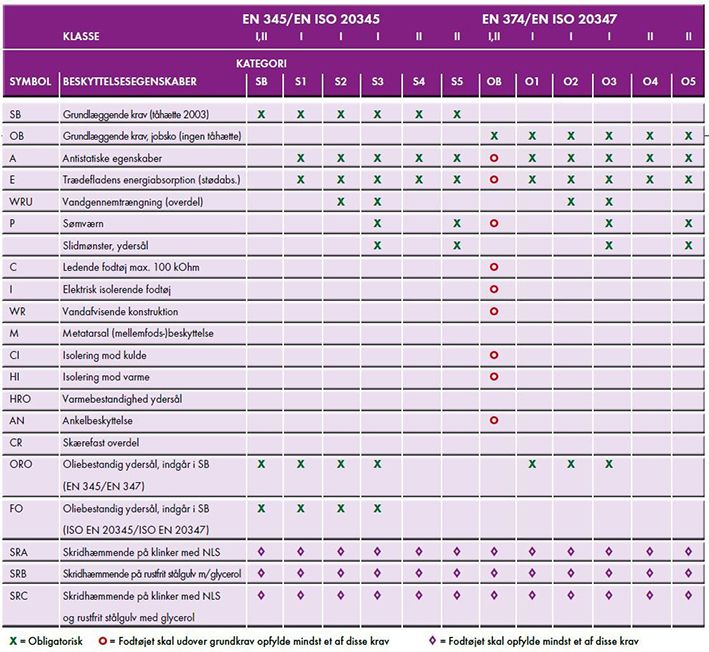
Safety and work shoes are divided into 2 classes
Class I: Footwear made of leather, textile or similar materials. Class II: Footwear made of rubber or polyurethane.
Revised standard for safety footwear EN ISO 20344
The standard describes the test methods and how they must be carried out for safety footwear EN ISO 20345 and occupational footwear EN ISO 20347. All types of tests must be conducted by an accredited testing institute.
Basic requirements for safety and work shoes
Upper leather, upper: Requirements for tear strength, water vapor penetration and pH value.
Midsole: Requirements for thickness, pH value, water absorption and desorption as well as abrasion resistance.
Outsole: Requirements for thickness, tear strength, abrasion resistance, flex resistance, hydrolysis and oil resistance.
Mechanical risks: 20 kg weight dropped from 1 meter and a compressive load of 1500 kg (applies only to safety footwear).
See the standards here
New requirements are included in EN ISO 20345
- Ergonomics: Fit and comfort (tested by a small number of people - independently)
- Chromium VI: If the upper is leather, it must not contain Chromium VI
- Insoles: Moisture absorption and wear resistance depending on insole type
EN ISO 20345:2004/tillæg1:2007
EN ISO 20347:2004/tillæg1:2007
Supplement to EN ISO 20345 - slip-resistant properties SRA, SRB, SRC are included in all safety shoes manufactured after October 2007.


