


Why is fall protection necessary?
Fall protection equipment doesn't have to be a hindrance
Our fall protection equipment is a fully-fledged work tool that provides significant benefits in terms of increased safety, productivity, reduced risk and less fatigue for the user.
Legislation:
European legislation requires that the employer ensures fall protection equipment is available to all employees who, in various work situations, are exposed to a risk of falling. The EN standard sets the threshold for fall risk at 2 metres. Fall protection must be used where work at height cannot otherwise be planned, organised and carried out safely, for example by using scaffolding or an approved safety railing. Fall protection equipment is only used for short-term tasks where the work cannot otherwise be performed safely.
Training and instruction
Before fall protection equipment is put into use, the user must have received instruction in how to use the equipment, information about the dangers of not using it, and regular training to use the equipment correctly. If the equipment is of a more technical nature, competent training is required to use the equipment in a specific work situation, e.g. mast work and rescue at height.
Rescue
The user must be instructed in a rescue plan after a fall, including training with appropriate rescue equipment, as a suspended person can quickly suffer injuries. Collective work platform. When choosing protective equipment, priority should be given to collective protective equipment, such as an approved safety railing.
Training
Our specially trained fall protection consultants can, by prior arrangement, provide instruction in the correct use of fall protection equipment and, in special cases, conduct the initial briefing.
There are three main types of fall protection:
- Equipment that prevents falls
- Equipment that catches a person during a fall
- Equipment that can raise or lower a person, e.g. in a well or silo
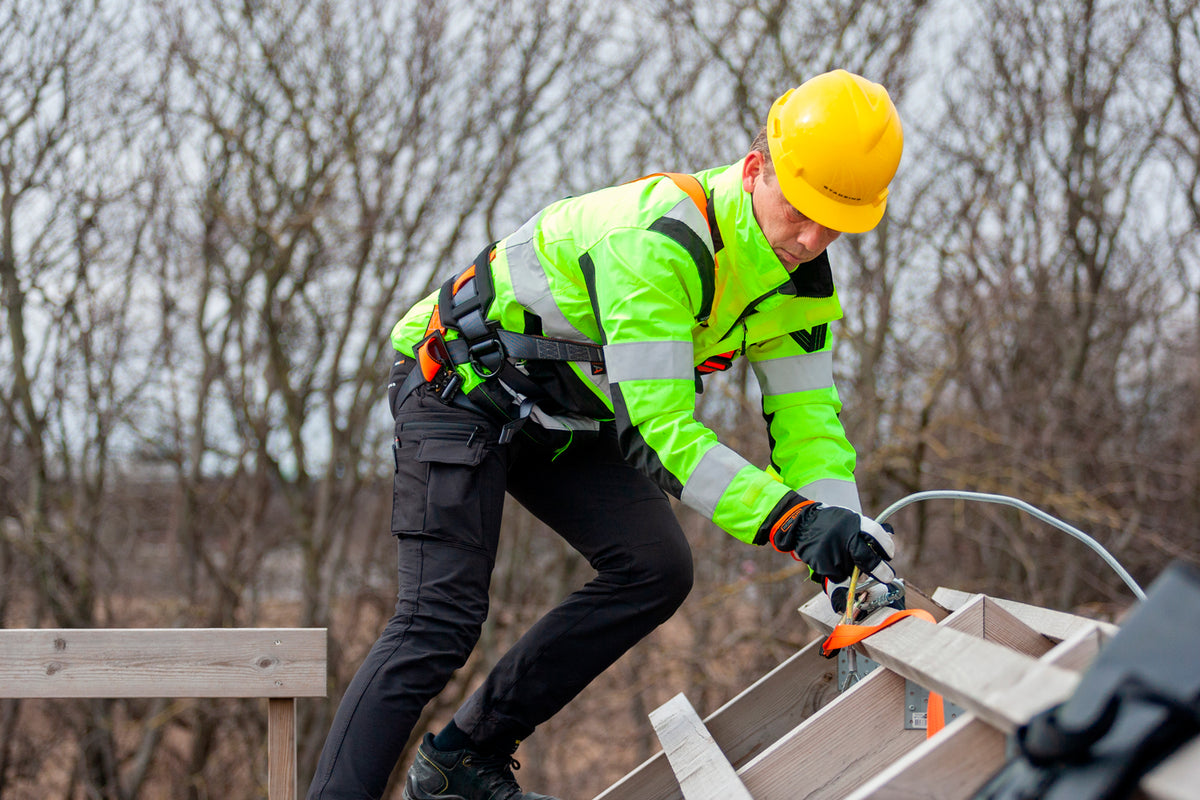
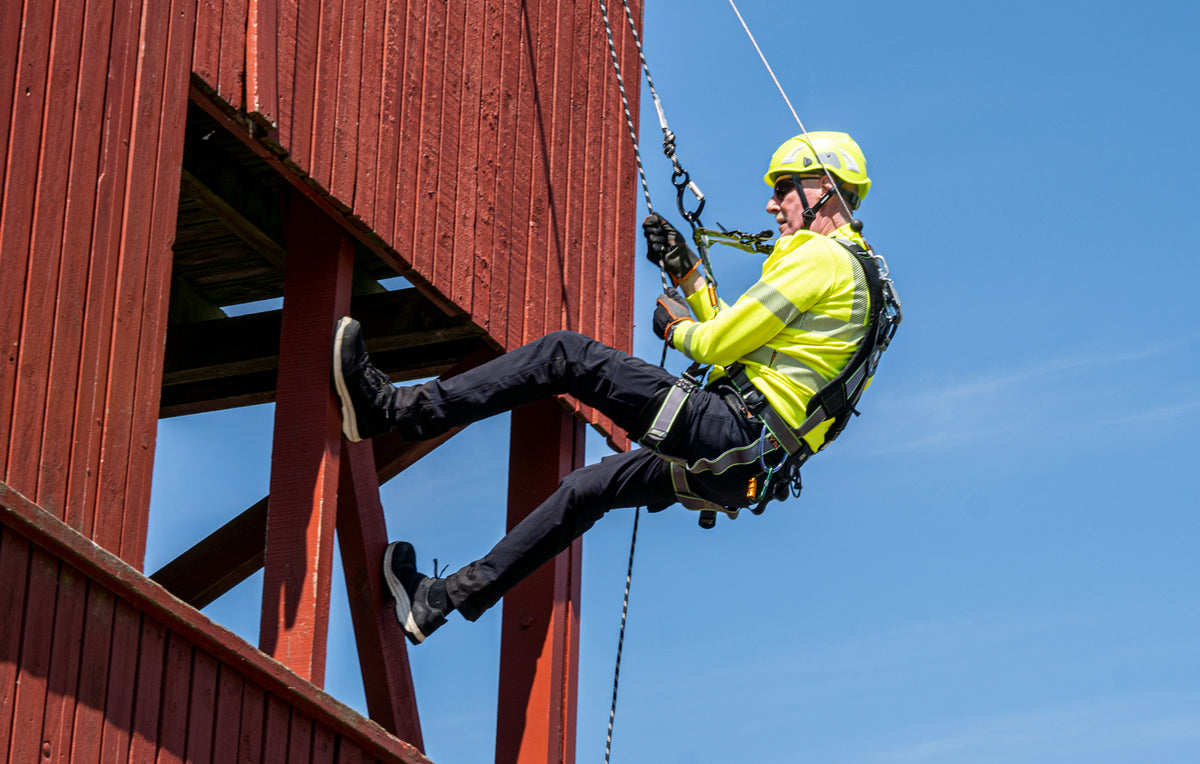
What are fixed fall protection systems?
This type of fall protection system serves as an anchor point for personal fall protection equipment. The advantage of this type of fall protection system is that when the user is connected, they can move safely at height where the system is installed, while a pendulum effect is eliminated.
The fall protection system can be in the form of wire or rail systems, vertical or horizontal, above or below the user. The fall protection system must be approved in accordance with applicable standards and all components must be tested together. The calculation for such an installation is extensive and may only be carried out by an authorized technician.
Stadsing has extensive knowledge and experience in this area; we have installed fixed systems for many years. Our references for the installation of fixed fall protection systems are numerous, and our expertise is industry-leading.
What is the lifespan of fall protection equipment?
The maximum lifespan for our products that are predominantly made of textile material is set at 10 years from the date of manufacture. However, this excludes external influences and special cases of equipment use.
We do not set a lifespan for our products that are predominantly made of metal. It can be unlimited if the product has undergone regular maintenance (at least once a year).
In any case, our products must always be inspected at least every 12 months. External influences: contact with chemicals, improper storage, exposure to extreme heat >50°C, UV radiation, wear and tear, etc.
Special cases of use: product degradation, the product having arrested a fall, mechanical deformation, the product being dropped, premature wear, frequency of use and improper usage conditions.


